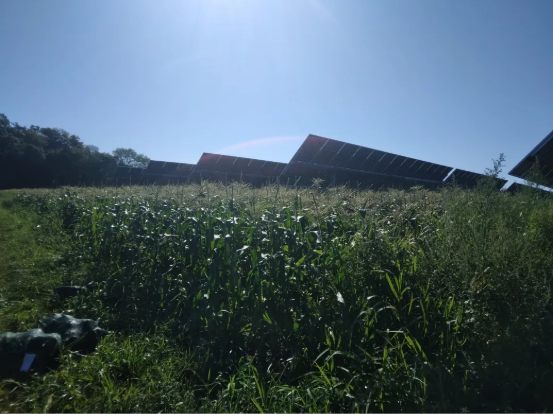
Oftentimes, we hear about solar power and agriculture competing for scarce land resources. However, the evidence suggests that these two can co-exist and even be mutually beneficial to one another. Agrivoltaics is the dual-use of land for agriculture and solar photovoltaic energy generation. Although primarily used for crop production, solar grazing is a variation where livestock graze in and around solar panels. Agrivoltaics systems can help farms diversify their income while meeting national clean energy goals.
A symbiotic cooling effect occurs when growing crops under solar panels. While all crops need sunlight to grow, too much can cause some to get stressed, especially cool-season plants such as brassicas. Plants growing under the diffused shade of photovoltaic panels are buffered from the day’s most intense heat. Shade reduces air temperature and the amount of water evaporating from soils; a win-win for both plants and farm workers on hot summer days. The plants give off water vapor, naturally cooling the photovoltaic panels and increasing panel efficiency.
Agrivoltaics in Western Massachusetts
Many farms are using agrivoltaics in Western Massachusetts, including one of our biggest local vendors. Joe Czajkowski of Joe Czajkowski Farms just completed his third harvest with a 2.2-acre system installed by Hyperion Systems LLC of Belchertown. The 852 panels produce 445 kilowatts of direct current, enough to power 45 homes. Though his corn might take a few days longer to mature, Czajkowski says there is no difference in its quality. In fact, in the ever-increasing heat of the summer, some crops may actually benefit from the extra shade.
For more information, see https://gazettenet.com/2025/08/24/hadley-farm-tests-future-of-food-and-energy/